
Learn how simple berms, raised soil rings around your trees and shrubs, can maximize water retention, encourage deep root growth, and protect your landscape during extreme heat.
By Cyrus Jones, Chief Operations Officer Garden Social Community Impact
With temperatures consistently climbing well above 110°F in southern Arizona’s Sonoran Desert, our landscape and garden plants need every advantage to thrive!
Through my work growing trees through our water conservation efforts here at Garden Social Community Impact, I have been spending much of my time focusing on low-water-use trees and helping them establish strong, healthy roots in our unique clay soil, and one of my go to techniques is berm building.

What Is a Berm in Horticulture?
In horticulture, a berm is a gently raised mound of soil that serves both practical and aesthetic purposes in the landscape. Unlike flat garden beds, berms introduce elevation and contour to otherwise level ground, helping gardeners manage water, improve soil conditions, and create visually dynamic planting areas.
Why Berms Matter?
In our clay-rich soils, water applied too quickly just runs off or sits on the surface. Berm raised soil rings around your plants help you:
• Trap and hold irrigation water right where roots need it.
• Encourage deeper root penetration for increased drought resilience.
• Prevent soil erosion and runoff during heavy watering or rain.
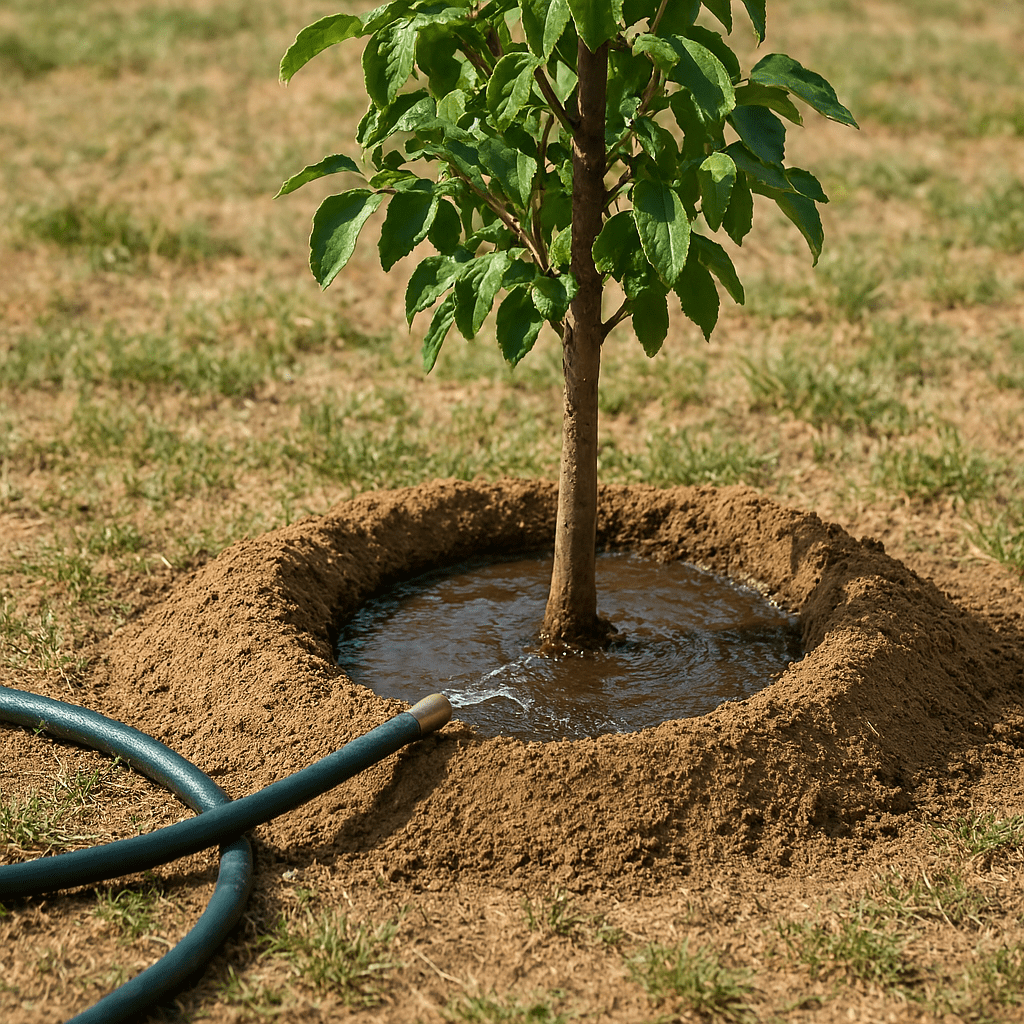
Berm Building Best Practices for Trees & Shrubs
1. Form a 3–4-inch high, 6–8-inch wide ring around the drip line (keep soil off the trunk).
2. Apply water slowly inside the basin, allowing it to seep in rather than pool. If using a hose, leave the hose on your berm with a very slow drip (as if you had accidentally missed tightening the faucet all the way). Water over a period of 45-minutes to 1.5 hours for most shrubs and trees.
3. Mulch inside and just outside the berm (2–3 inches) to lock in moisture and cool roots.
4. Check and reshape berms as needed.
For more information about watering best practices, check out the ‘Watering by the Numbers’ handbook on our Resources page!

Additional Low-Water Tips for Our Summer Heat
– Plant or transplant during cooler hours (early morning or evening).
– Inspect hoses, emitters, and drip lines weekly for leaks or clogs.
– Choose native and drought-tolerant trees like desert willow, Acacia, mesquite or palo verde.
Need hands on help with berms, irrigation installs, or tree selection? Garden Social is here for Maricopa residents with expert guidance on sustainable landscaping, soil health, and garden structures.
Stay cool, stay rooted, and water wisely!
 Garden Social
Leave a comment