A Garden Social guide to thriving through long days, intense sun, and Arizona’s famously stubborn soil.
– By Austin Lynn, Owner
Zone 9b gardeners don’t need a reminder that summer is hot—we live it. But the best summer gardens aren’t built in June. They’re built now, by setting up your soil and your watering patterns so your plants can handle what’s coming. Here are five mindset shifts (and a few practical moves) that make a huge difference once the sun gets high and the days get long.
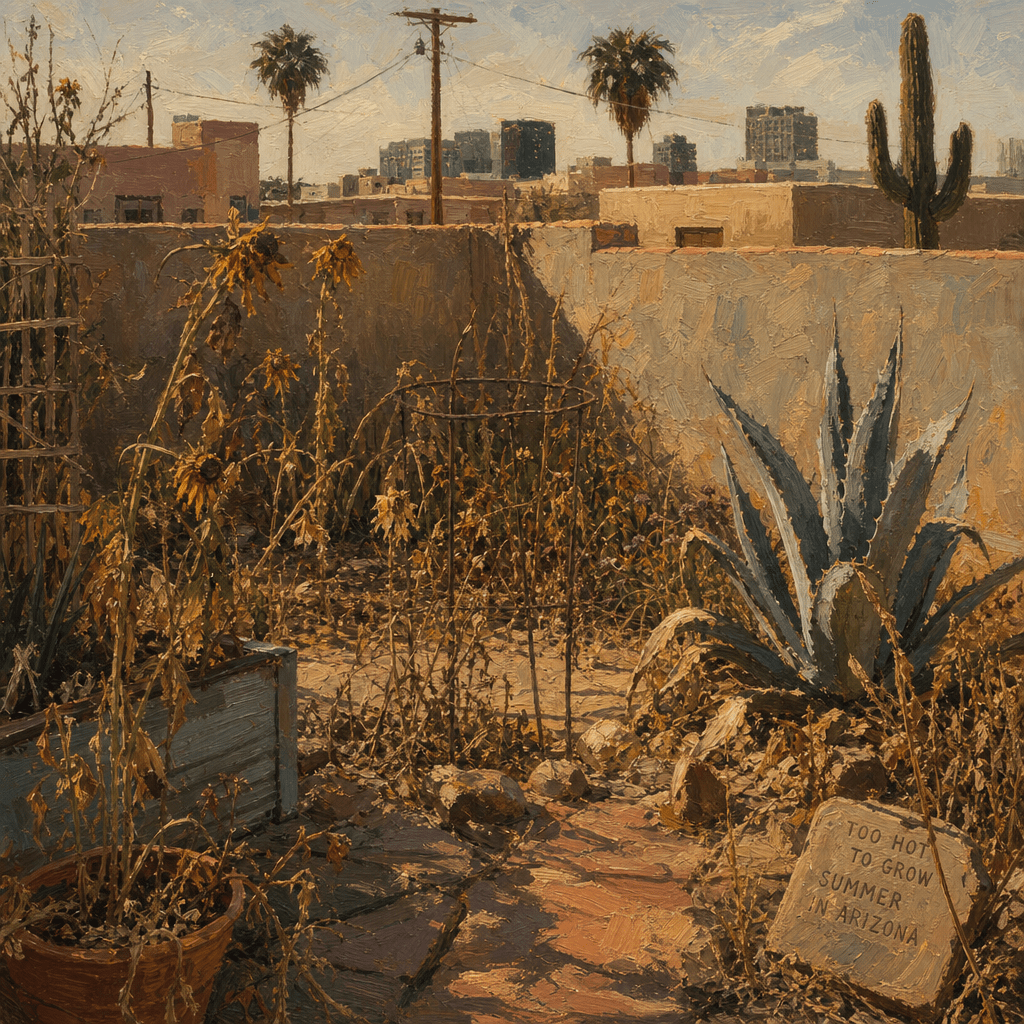
Heat is intimidating, but it’s not the real issue
Yes—our summers are getting hotter, and prolonged high temperatures absolutely stress plants. But in much of Zone 9b, the bigger battle is excessive sunlight paired with long daytime hours leading into early summer. Around the solstice, places like Phoenix can see roughly 14+ hours of daylight, which means your garden is exposed to intense radiation for longer stretches each day.
That long, bright exposure drives several stress factors at once: faster moisture loss through leaves, hotter leaf surfaces, and a bigger demand on roots to pull water and nutrients at the exact moment your soil is least cooperative. When gardeners say “everything fried overnight,” it’s often a sun + daylength problem more than a single temperature spike.
The takeaway: prepare for summer like you’re preparing for a brighter, longer day—not just a hotter thermometer. That means deeper roots, better soil structure, and smart surface protection (we’ll get to mulch), so your plants can keep up with the demand.
Watering best means watering LESS
It sounds backward in the desert, but one of the fastest ways to create a fragile summer garden is frequent, shallow watering. Quick daily splashes keep the top inch damp and train roots to live where it’s hottest and driest. Then, when real summer arrives, the plant has no depth to draw from—so it wilts, scorches, and “mysteriously” declines.
Instead, aim for meaningful irrigation cycles: slow, steady, deep soaks on an infrequent schedule. Deep watering encourages roots to chase moisture downward, which stabilizes the plant during heat waves and makes it far more resilient during high-sun periods. Simply put: the deeper your roots during summer, the better your plants look.
- Water slower, not just longer. A hose trickle, drip line, or soaker setup beats a five-minute spray every time.
- Wait until the soil tells you. Let the surface dry between cycles so oxygen can return to the root zone.
- Think “soak and rest.” The rest period is where roots grow and explore.
Arizona clay — not sand
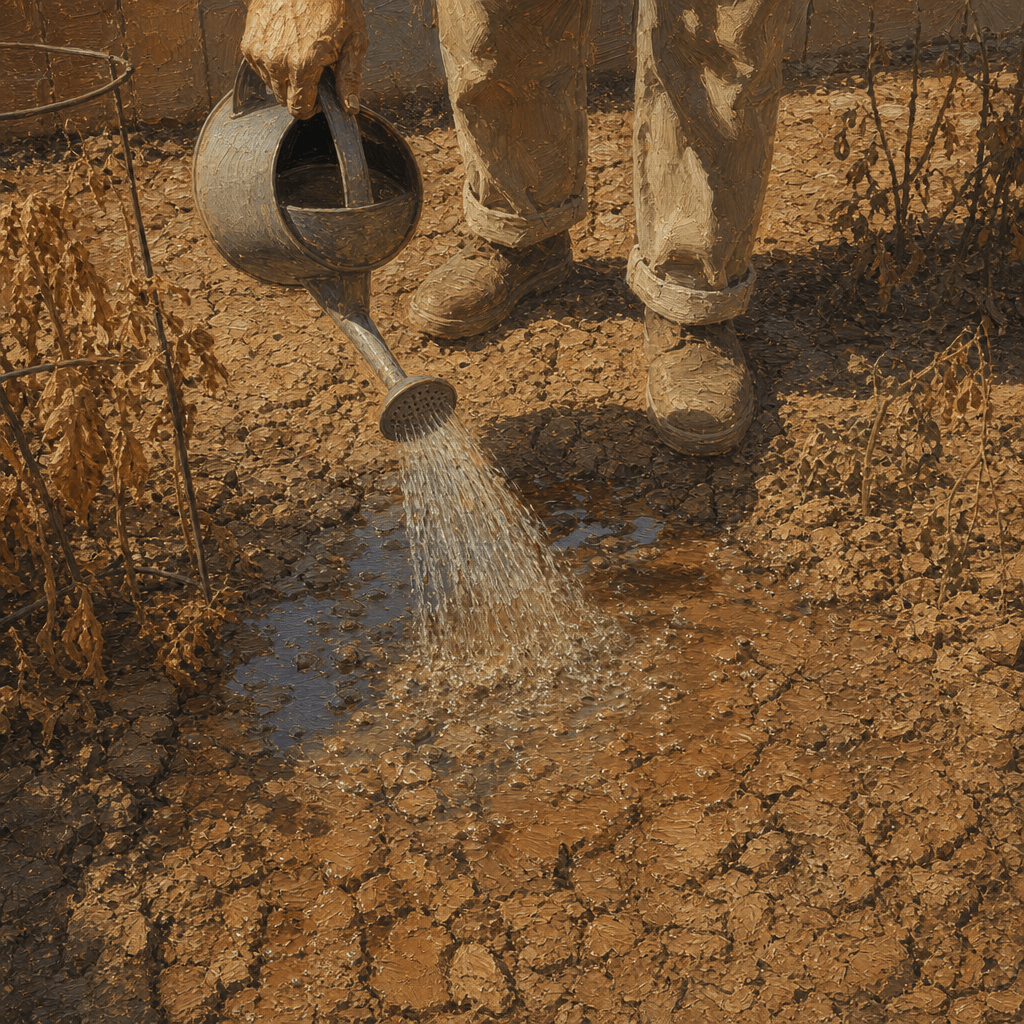
A quick reality check: most of us aren’t gardening in “sandy desert soil.” In many parts of Arizona, the native soil you dig into is clay—and clay behaves very differently than sand.
Of the three primary soil textures, clay has the smallest particle size, sand has the largest, and loam lives somewhere in the middle (which is why loam is the dream). Clay particles also carry a natural negative charge, which affects how they interact with minerals and water.
Here’s where desert gardening gets tricky: our native soils often have a surplus of sodium ions (salts). Excess sodium can cause clay to disperse and then seal up, clogging pore spaces so water and oxygen struggle to move through the profile. Gypsum (calcium sulfate) is commonly used in sodic or sodium-affected soils because calcium can replace sodium on clay surfaces and help clay particles flocculate (re-form into stable aggregates), improving infiltration and structure.
Sandy soils are almost the opposite: they drain beautifully, but struggle to hold water and nutrition. Arizona clay can hold nutrients, but without balance it can be an obstacle—especially in summer, when you need water to penetrate deeply and roots to breathe.
Mulch doesn’t work… unless
Mulch is one of the best tools we have for summer: it cools the soil surface, reduces moisture loss, and protects the biology that keeps your garden stable. In a high-sun climate, that protection can be the difference between “surviving” and “thriving.”
But mulch on unbalanced clay can backfire. If your soil already has low porosity, poor oxygen flow, and high sodium, adding a thick blanket on top can make it even harder for the soil to “breathe” and release moisture. I often compare dense clay to pig skin—it doesn’t sweat. If you trap heat and humidity at the surface without fixing structure underneath, you can create a stagnant layer that roots hate.
The “unless” is simple: mulch works beautifully after you’ve corrected the soil. Balance first, then mulch becomes a powerful ally—keeping temperatures down while your improved soil structure handles water and oxygen the way it’s supposed to.
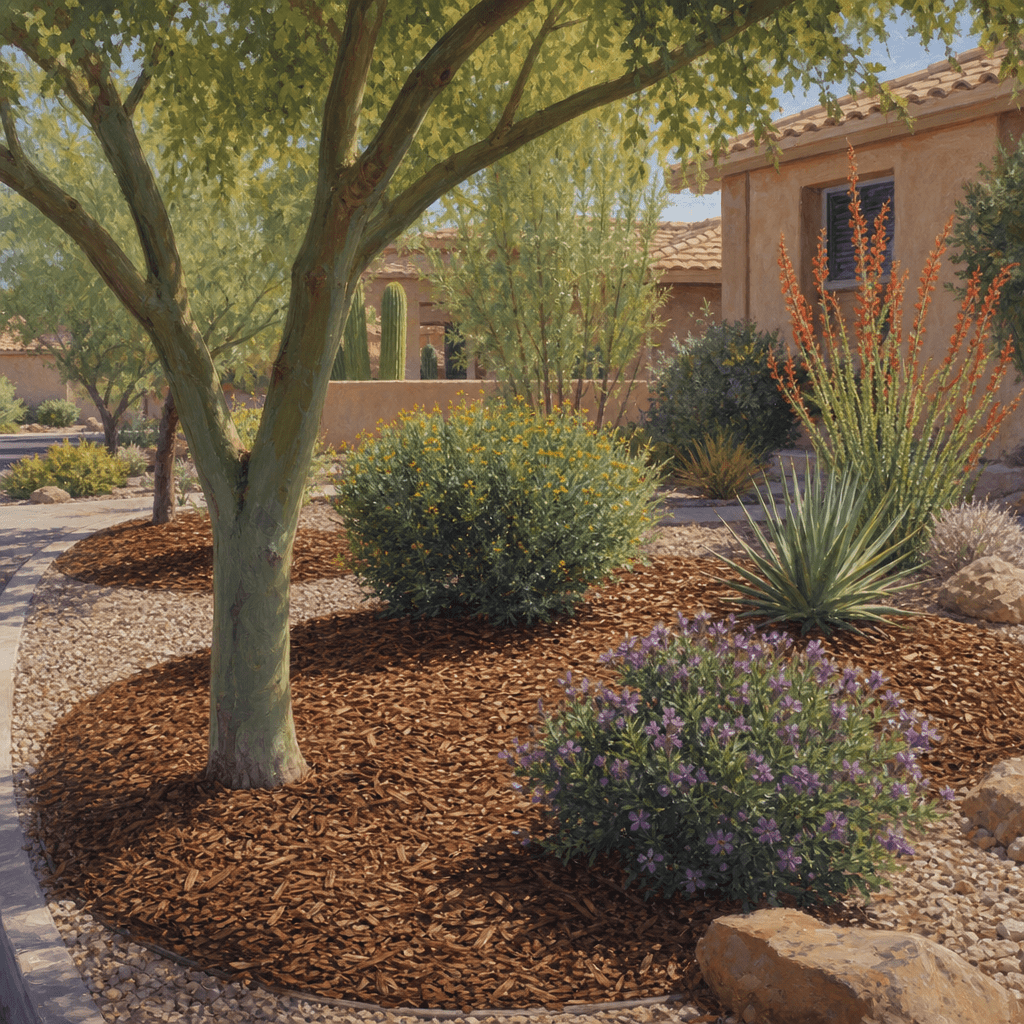
The most important factor: soil balance
If there’s one thing we wish every Zone 9b gardener knew going into the season, it’s this: in much of our region, the core soil issue isn’t “lack of fertilizer”—it’s excess salts and a lack of structural balance. Fixing that (ideally weeks before planting) makes every other step easier.
For salty clay soil, one of the simplest and most effective moves is to blend compost with native soil at roughly a 50/50 ratio in the area you’re planting. Compost adds organic matter, increases pore space, improves water infiltration, and supports the microbes that keep nutrients cycling.
For stubborn soils that don’t drain well, calcium sulfate (gypsum) can be a helpful amendment in sodium-affected conditions. Gypsum supplies soluble calcium, which can replace sodium on clay exchange sites; the shift helps clay particles aggregate (flocculate), opening pathways for water infiltration and oxygen movement.
Once the soil is amended and draining properly, then mulch becomes the perfect finishing layer. It shields soil bacteria and fungi from sun and temperature swings, helping your soil stay naturally balanced—so your plants don’t have to fight the ground they’re growing in.
An empty house quickly decays
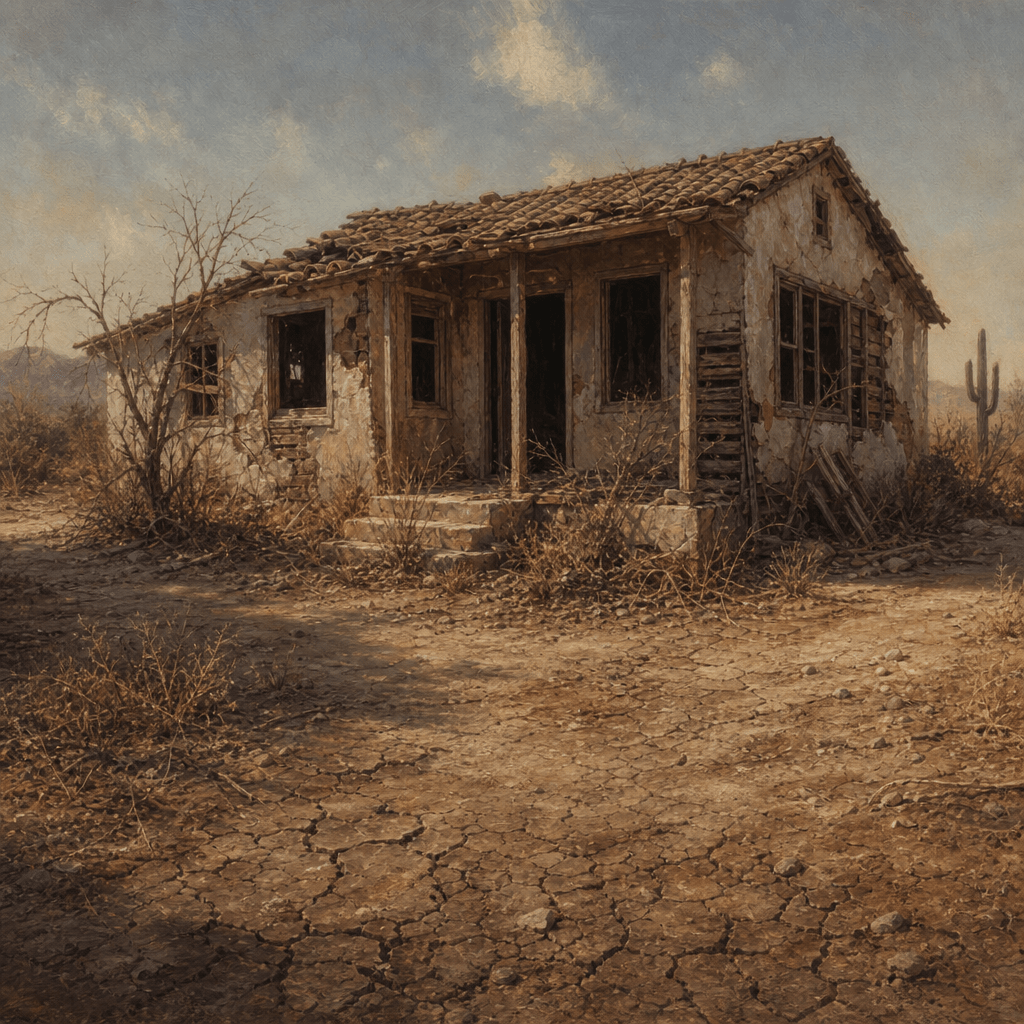
Even after you correct drainage and salt issues, desert gardens have a sneaky problem: soils can “re-desertify” fast when the heat, sun, and irrigation cycles ramp up. Think of healthy soil like a lived-in house. When it’s occupied, there’s activity, movement, and upkeep. When it’s empty, it starts to break down.
Your “occupants” are the soil bacteria, fungi, and other microbes that hold structure together and keep nutrients cycling. In desertified clay, they’re often underfed and underprotected—so the soil crusts, compacts, and becomes less responsive to water. Consistently adding organic matter changes the whole trajectory: it supports beneficial organisms, improves aggregation (better pores), and helps soil hold water and nutrients more effectively.
That’s why we like a two-part routine through the warm season: (1) a rich blend of compost to provide food and habitat, and (2) a consistent application of microbial / “probiotic” fertilizers (beneficial microbe inoculants or biostimulants) to reinforce the living community around roots. Used together, they help your soil stay active and resilient instead of sliding back into a sealed, lifeless layer during peak summer stress.
Local note: If you’d rather not guess your inputs, Garden Social carries a premium compost blend available in bulk, plus rich, bioactive probiotic fertilizers at our garden center—so you can keep your soil fed and biologically active all summer.
Your Zone 9b “before it gets brutal” checklist
- Adjust your expectations: plan for long, intense sun exposure, not just heat.
- Switch to deep soak irrigation cycles with rest time in between.
- Assume you’re working with clay until proven otherwise—and treat it like clay.
- Balance soil first: compost (about 50/50) in the planting zone; consider gypsum where sodium and drainage are an issue.
- After soil is breathing and draining, apply mulch to lock in the gains.
- Keep the soil “occupied”: feed microbes with ongoing compost plus a microbial/probiotic soil fertilizer or biostimulant through summer.
If you want help dialing in your soil and watering strategy for your specific yard, Garden Social can help you troubleshoot what you’re working with and build a plan that holds up all summer long.
Ready for hands-on help? Garden Social offers educational home-visit consultations with our horticulture experts, compost delivery, soil balancing services, irrigation installation, and more. Contact our service team to learn more!
Garden Social is here for you!
In the ever-evolving journey of desert gardening, patience and adaptability are your greatest allies. As you face each season’s challenges and rewards, remember that you don’t have to grow alone. Garden Social is here to support you every step of the way.
Whether you’re seeking expert landscape and garden design, irrigation planning and system repair or installation, help with planting and soil preparation, our team is dedicated to transforming your outdoor space. We handle the hard work so you can savor the true joys of cultivating a beautiful and resilient desert garden. Let us partner with you—so your garden can flourish, season after season.
For more information, please feel free to check out any of the pages below – or visit us in person!


Leave a Reply