Citrus trees are some of the most beloved fruiting plants in warm-climate landscapes, it definitely hits home to imagine they don’t belong in the low, arid desert regions of southern Arizona, especially with so many available options!
Oranges, lemons, limes, grapefruits, mandarins, and pomelos all belong to the citrus family, a group of evergreen trees and large shrubs known for glossy leaves, fragrant flowers, aromatic oils, and bright, acidic fruit. Although citrus now grows around the world, its ancestral home is traced back to tropical and subtropical regions of South, East, and Southeast Asia, with many modern citrus varieties descended from ancient hybrids of citron, mandarin, and pomelo.
That native “home” climate is VERY different from the low desert of Southern Arizona. Citrus evolved in warm regions where humidity, seasonal rainfall, filtered light, and dense surrounding vegetation helped protect bark and roots from extremes. In Southern Arizona, citrus growers are working with a very different equation: intense desert sun, low humidity, alkaline clay soils, reflected heat from hardscape, and long periods of drought. The good news is that citrus can grow beautifully here. The fun—and sometimes frustrating—part is learning how to support a subtropical plant in a hot, arid, sun-drenched landscape.
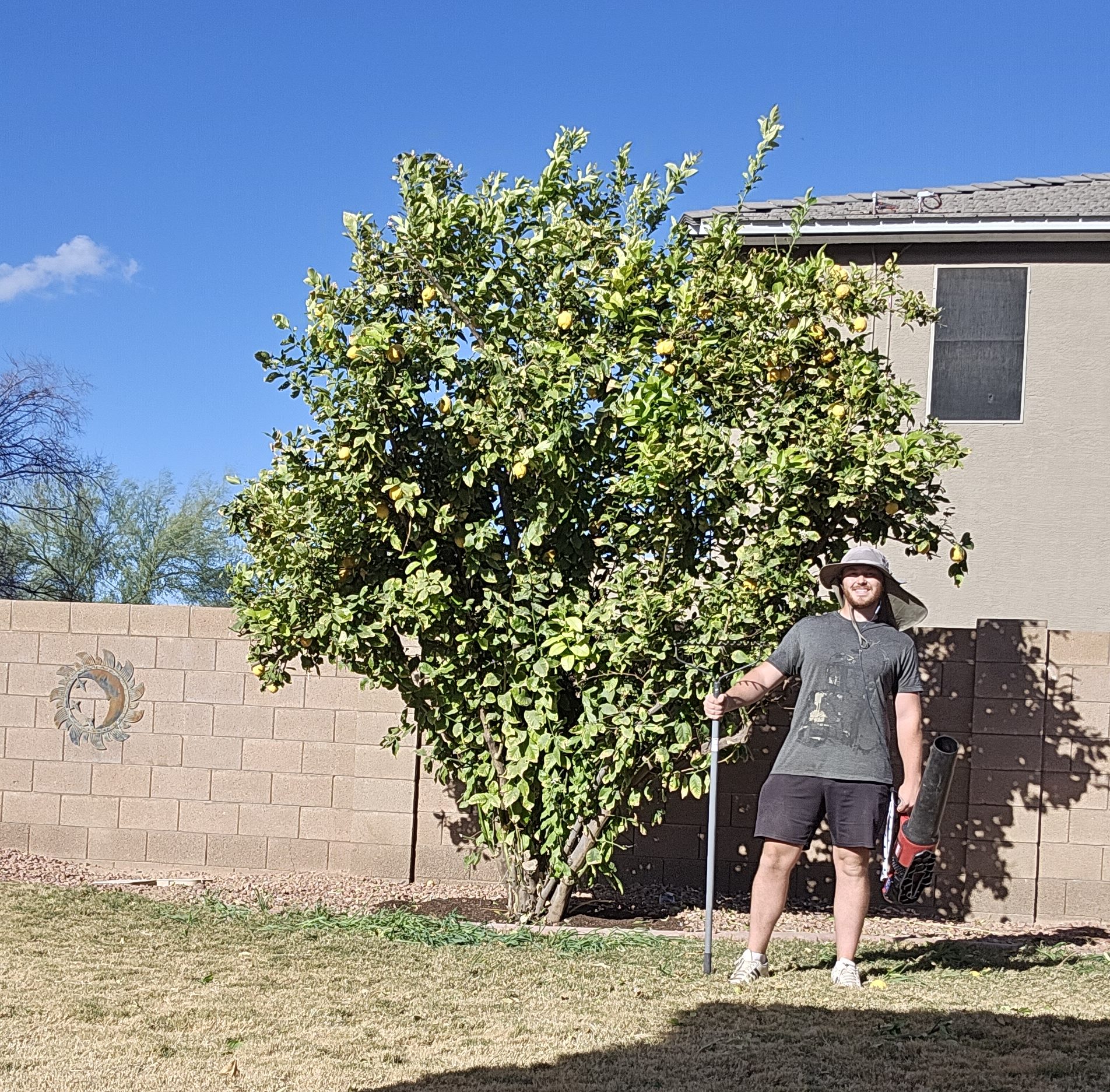
Challenge One: The Desert Sun
Arizona sunlight is not gentle. During the hottest months, direct sun can be especially damaging to exposed citrus bark, which is far more sensitive than many homeowners realize. In a healthy, naturally shaped citrus tree, the lower canopy acts like built-in sunscreen, shading the trunk and main scaffold branches. When that protection is missing, exposed bark can sunburn, crack, peel, and eventually die back.
Young citrus trees, nutrient-deficient trees, and trees that have been pruned too aggressively are especially vulnerable. Sun-damaged bark can interrupt the movement of water and nutrients, causing leaves to drop, branches to decline, and entire limbs to die. In severe cases, repeated sunburn can weaken the tree so dramatically that the entire citrus tree is lost. Preventing that damage is much easier than trying to reverse it after the bark has already been compromised.
Challenge One: The Desert Sun
Arizona sunlight is not gentle. During the hottest months, direct sun can be especially damaging to exposed citrus bark, which is far more sensitive than many homeowners realize. In a healthy, naturally shaped citrus tree, the lower canopy acts like built-in sunscreen, shading the trunk and main scaffold branches. When that protection is missing, exposed bark can sunburn, crack, peel, and eventually die back.
Young citrus trees, nutrient-deficient trees, and trees that have been pruned too aggressively are especially vulnerable. Sun-damaged bark can interrupt the movement of water and nutrients, causing leaves to drop, branches to decline, and entire limbs to die. In severe cases, repeated sunburn can weaken the tree so dramatically that the entire citrus tree is lost. Preventing that damage is much easier than trying to reverse it after the bark has already been compromised.
Challenge Two: Spatial Demand
One of the biggest surprises for new citrus owners is that citrus does not naturally want to grow as a tall, open, ornamental tree. In its healthiest form, citrus behaves more like a large evergreen shrub: broad, dense, full, and leafy from top to bottom. That dense foliage is not just attractive—it is protective. It shades the bark, cools the interior of the plant, preserves moisture, and helps the tree maintain a more stable microclimate.
In Southern Arizona, encouraging this natural form is one of the best things a grower can do for long-term citrus health. However, not every homeowner has room for a mature citrus tree that may occupy a 20-by-15-by-15-foot footprint with a canopy that hangs nearly to the ground. In small yards, side yards, courtyards, and HOA-managed landscapes, that natural shape can feel too large, too messy, or too visually heavy. That pressure often leads directly to the next challenge: overpruning.
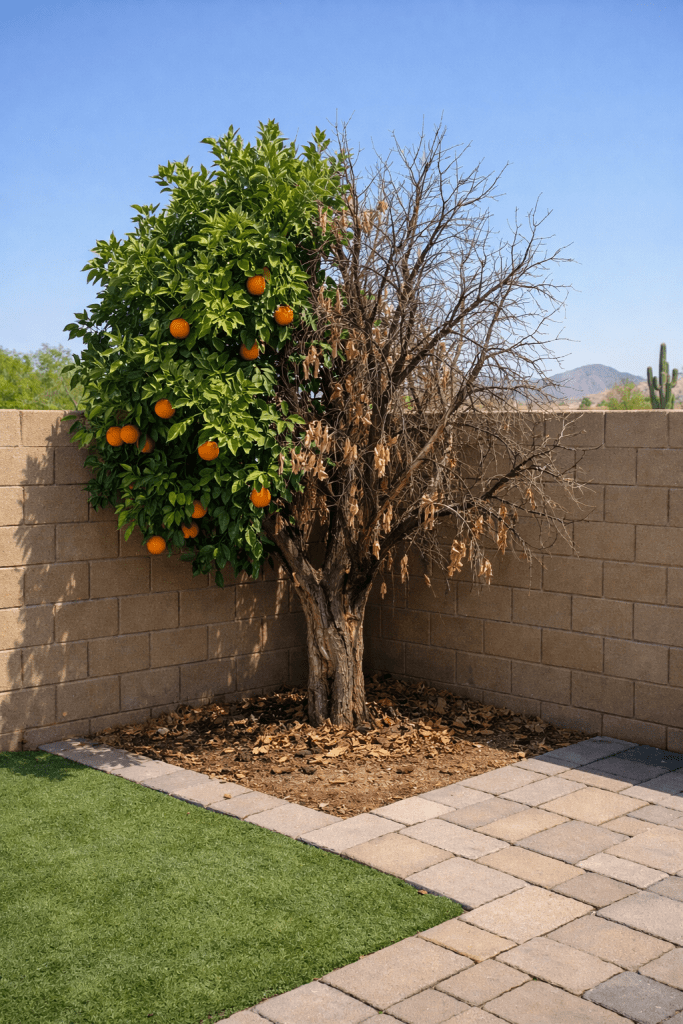
Challenge Three: Improper and Excessive Pruning
Pruning citrus is not wrong. In fact, occasional selective pruning can be helpful when removing dead wood, damaged limbs, crossing branches, or inner growth that competes for light and airflow. Thoughtful pruning can also support fruit production and make a tree easier to manage. The problem begins when citrus is pruned like an ornamental shade tree rather than a fruiting evergreen shrub.
Many homeowners prefer a clean, trained shape—often a “lollipop” form with a bare trunk and a rounded canopy. This style can look tidy and intentional, especially in tight spaces. But the same pruning that creates that look can also strip away the tree’s natural protection. Once the trunk and major branches are exposed to full desert sun, the risk of bark burn rises sharply. Over time, what began as an aesthetic decision can lead to branch dieback, reduced vigor, and a tree that struggles through summer.
For citrus trees that must be maintained in a trained or ornamental shape, the goal is not simply to prune less—it is to replace some of the lost protection. That means limiting exposure where possible, protecting exposed bark, improving soil moisture retention, and reducing reflected heat around the tree.
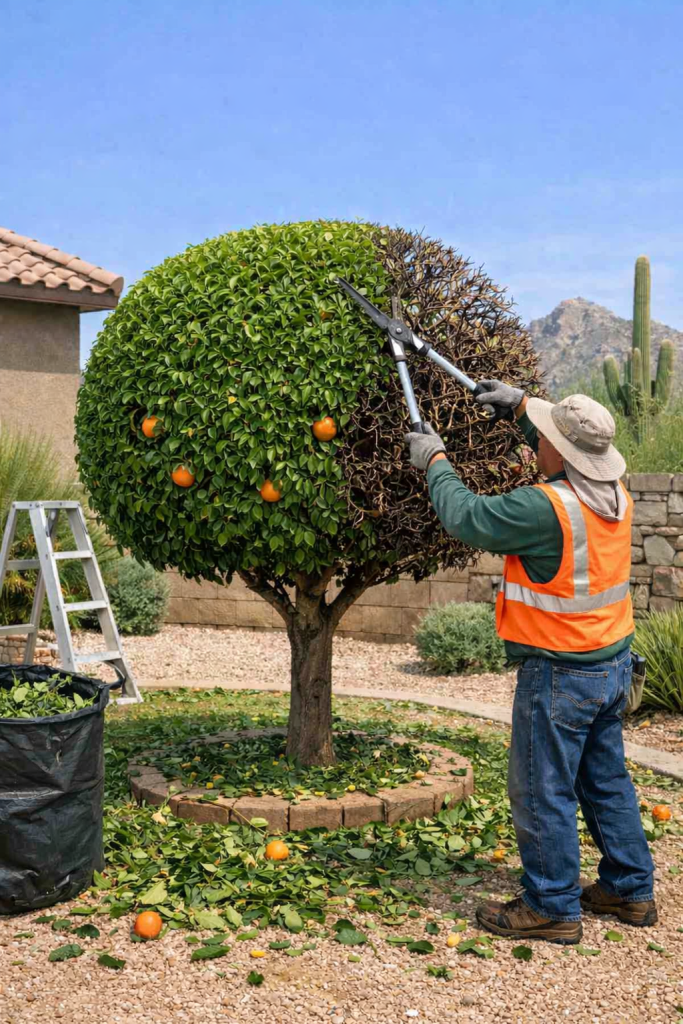
Challenge Four: Limiting UV and Heat Exposure
The best way to protect your citrus tree is proper planning. Citrus should ideally be planted in areas with morning sun and afternoon shade, like the east side of a home or east of a taller tree, wall, or structure that can soften the hottest part of the day. Morning sun provides the energy citrus needs, while afternoon shade helps reduce heat stress during peak heat.
Avoid planting citrus directly against heat-reflective walls, driveways, sidewalks, gravel expanses, or concrete patios when possible. These surfaces absorb and radiate heat, often creating a hotter microclimate than the surrounding yard. A tree that might tolerate full sun in open soil can struggle when it is surrounded by masonry, rock, and reflected afternoon light.
For citrus already in full sun, improving the root zone can make a major difference. Build a wide tree well free of gravel, add rich compost to your soil for structure, and top the area with mulch to reduce evaporation and moderate soil temperature.
If a citrus tree has been pruned up for aesthetics, protect all sun-exposed bark. A latex-based, tree-safe paint can be applied to the trunk and exposed branches to reflect UV and reduce heat absorption. Use only one to two light coats so the bark remains protected without being sealed too heavily. Breathable tree wrap can also be useful, especially on young trees or newly exposed trunks, as long as it is monitored and replaced as needed.
Challenge Five: Soil Conditions
Anyone who has tried to grow plants in Southern Arizona knows the soil can be unforgiving. Many yards contain heavy clay, compacted layers, high alkalinity, accumulated salts, and sometimes caliche. Clay can hold nutrients and moisture, but it can also drain slowly, compact tightly, and create low-oxygen conditions around roots. Salts from irrigation water and native soil can build up over time, stressing citrus roots and interfering with water uptake. In hot weather, this combination can leave a tree both overwatered and thirsty: wet soil that roots cannot breathe in, plus salts that make water harder to absorb.
Citrus owners can improve these conditions by focusing on drainage, organic matter, and deep watering. Before planting, test how water moves through the site. If water sits for too long, address compaction and drainage before installing the tree. Avoid burying the root flare or planting too deeply. In established landscapes, use compost as a recurring soil-building tool, not a one-time fix. Topdressing with compost and mulch helps feed soil biology, improve structure over time, moderate surface temperatures, and reduce evaporation.
Watering technique is equally important. Citrus should be watered deeply enough to reach the active root zone, and the watering basin should expand as the canopy expands. Shallow, frequent watering encourages shallow roots and salt accumulation near the surface. Deeper irrigation helps move salts below the root zone and encourages stronger root development. In clay soils, irrigation should be slow enough to soak in rather than run off, with enough time between watering events for oxygen to return to the soil.
Growing citrus in Southern Arizona is not about forcing a tree to ignore the desert. It is about understanding what citrus naturally wants and then helping it adapt. Give the tree protection from harsh afternoon sun. Preserve as much lower canopy as space allows. Prune with restraint and purpose. Protect exposed bark when a trained shape is necessary. Improve the soil slowly and consistently. Water deeply, mulch generously, and plan for heat before the heat arrives.
With the right care, citrus trees can become some of the most rewarding plants in a desert landscape—providing shade, fragrance, evergreen beauty, and fresh fruit through the cooler months. The key is respecting the plant’s subtropical roots while giving it the desert-specific support it needs to thrive.
Bring Home Better Citrus—with Care That Helps It Thrive
At Garden Social, we do more than talk about citrus—we grow them, sell them, plant them, and care for them in the same local setting we write about in this article. Our high-quality, locally grown citrus trees are selected and raised for our region, giving homeowners a stronger starting point than coastal and greenhouse raised citrus. When you choose a tree from Garden Social, you are not just buying a plant; you are investing in a healthier, locally grown tree backed by a team that understands desert sun, clay soil, heat stress, pruning mistakes, nutrient timing, and seasonal care.
That support matters. A citrus tree can be a long-term feature in your landscape, but the first few seasons determine whether it merely survives or truly thrives. Garden Social can help you choose the right variety for your space, place it where it has the best chance of success, prepare your soil, build a healthier root zone, and establish a care plan that fits your yard. For existing citrus trees, we offer thoughtful pruning, fertilization, seasonal prep, UV protection application, composting, mulching, soil conditioning, and ongoing care designed to reduce stress and support stronger growth.
Whether you’re planting your first lemon tree, trying to rescue a sunburned orange, managing a mature grapefruit, or shaping citrus for a smaller yard, our goal is the same: help you enjoy the beauty, fragrance, shade, and fruit of citrus without guessing your way through desert growing conditions. For locally grown citrus and the care team that helps it thrive, consider Garden Social.
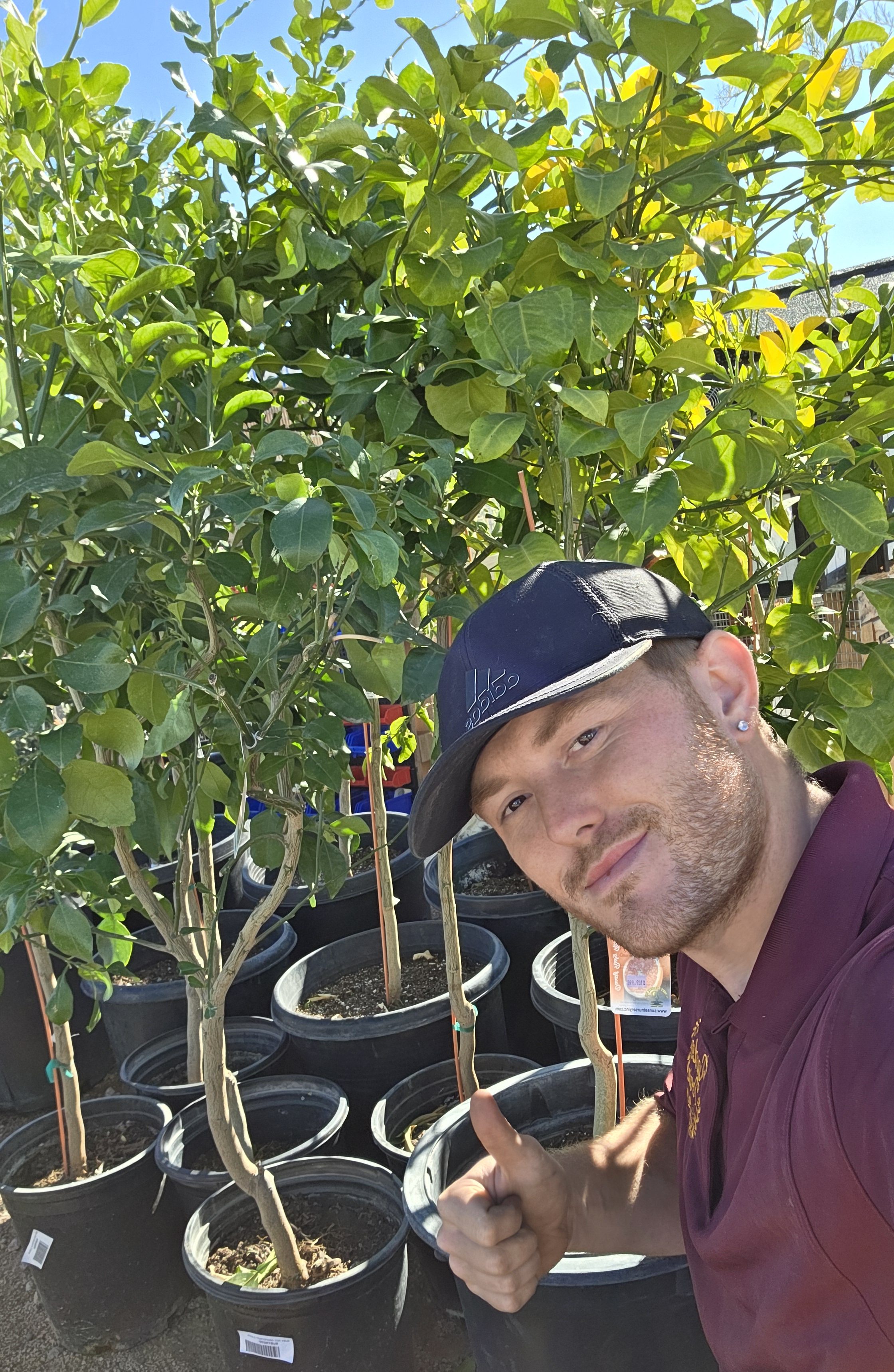

Garden Social is here for you!
In the ever-evolving journey of desert gardening, patience and adaptability are your greatest allies. As you face each season’s challenges and rewards, remember that you don’t have to grow alone. Garden Social is here to support you every step of the way.
Whether you’re seeking expert landscape and garden design, irrigation planning and system repair or installation, help with planting and soil preparation, our team is dedicated to transforming your outdoor space. We handle the hard work so you can savor the true joys of cultivating a beautiful and resilient desert garden. Let us partner with you—so your garden can flourish, season after season.
For more information, please feel free to check out any of the pages below – or visit us in person!
 Garden Social
Leave a comment