– By Austin Lynn, Garden Social
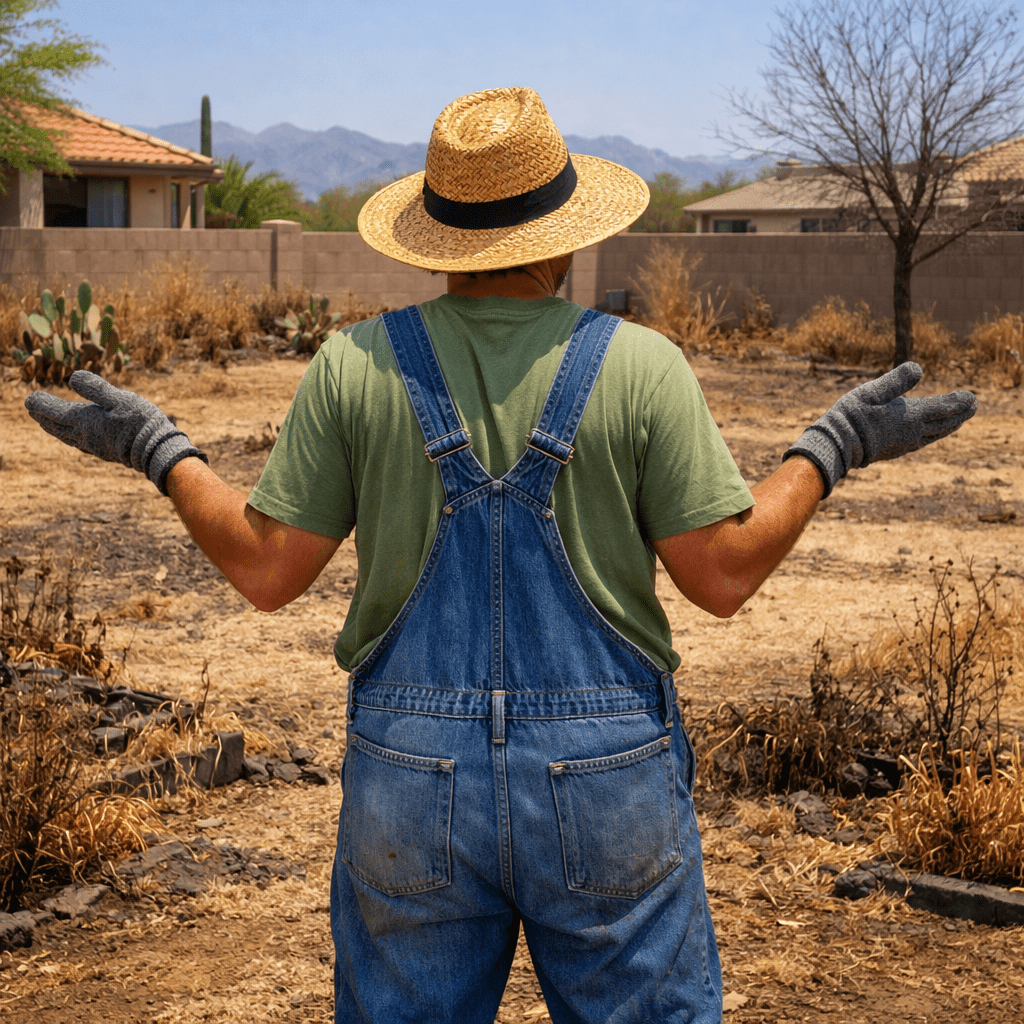
You’re doing it all wrong—or at least, you’re probably doing the same thing many Arizona gardeners do every summer: reacting instead of planning. When the heat tightens its grip, people panic, overwater, fry tender plants in the wrong exposure, or give up entirely until fall. If that sounds familiar, you’re not alone. The good news is that thriving through an Arizona summer is less about perfect plants and more about consistent strategy. Once you understand how shade, watering, and soil work together, your garden and landscape can stay greener, fuller, and far more resilient through the toughest stretch of the year.
You’re Doing It All Wrong—and That’s Fixable
Let’s start with the most common summer mistakes: too much water, too much sun, too much urgency, and not enough patience. In Arizona, extreme heat doesn’t mean your plants need constant splashing or emergency rescue every afternoon. It means they need protection, depth, and rhythm. If you’re watering shallowly every day, placing delicate plants in punishing exposures, or expecting a newly planted tree to “push through” a south-facing blast zone, you’re setting your landscape up for stress. Arizona summer plant care is not about doing more. It’s about doing the right things, in the right order, with consistency.
Where to Start?
Most people gravitate toward moisture first and rapidly drown their desirable plants, or they scratch the summer garden season entirely and hide away until fall. But the real key is shade. In Arizona heat, shade is not optional support—it is infrastructure. Before you obsess over irrigation schedules or buy another plant you hope will “handle the heat,” ask a more important question: where will this plant be protected during the harshest part of the day?
Research and Arizona gardening guidance consistently emphasize that intense heat accelerates water loss, raises plant stress, and makes direct exposure far more damaging when temperatures push into the triple digits. Creating shade first reduces stress and gives every other part of your care routine a better chance to work.
Build a Microclimate, Not a Sun Trap
I often find myself working with customers who want to plant the most sun-intolerant plants dead-center in a south-facing yard that gets hammered all summer long. That kind of exposure will absolutely punish lovely new trees and shrubs before they ever have a chance to establish. To build the abundant, green, microclimate yard you actually want, you need to layer shade. That can mean planting impactful canopy trees, using taller shrubs as living buffers, or erecting shade structures to the west of where you want to place more sensitive plants.
Western exposure is especially important because afternoon sun is often the most brutal. As the shade cascades over what used to be inaccessible or limited planting space, you unlock the ability to grow with more diversity, better texture, and far greater long-term success. Arizona summer gardening resources repeatedly recommend shade cloth, canopy planning, and strategic plant placement because the difference between survival and failure is often a few hours of protected light.
Water Consistently Inconsistent: Deep, Slow, and Early
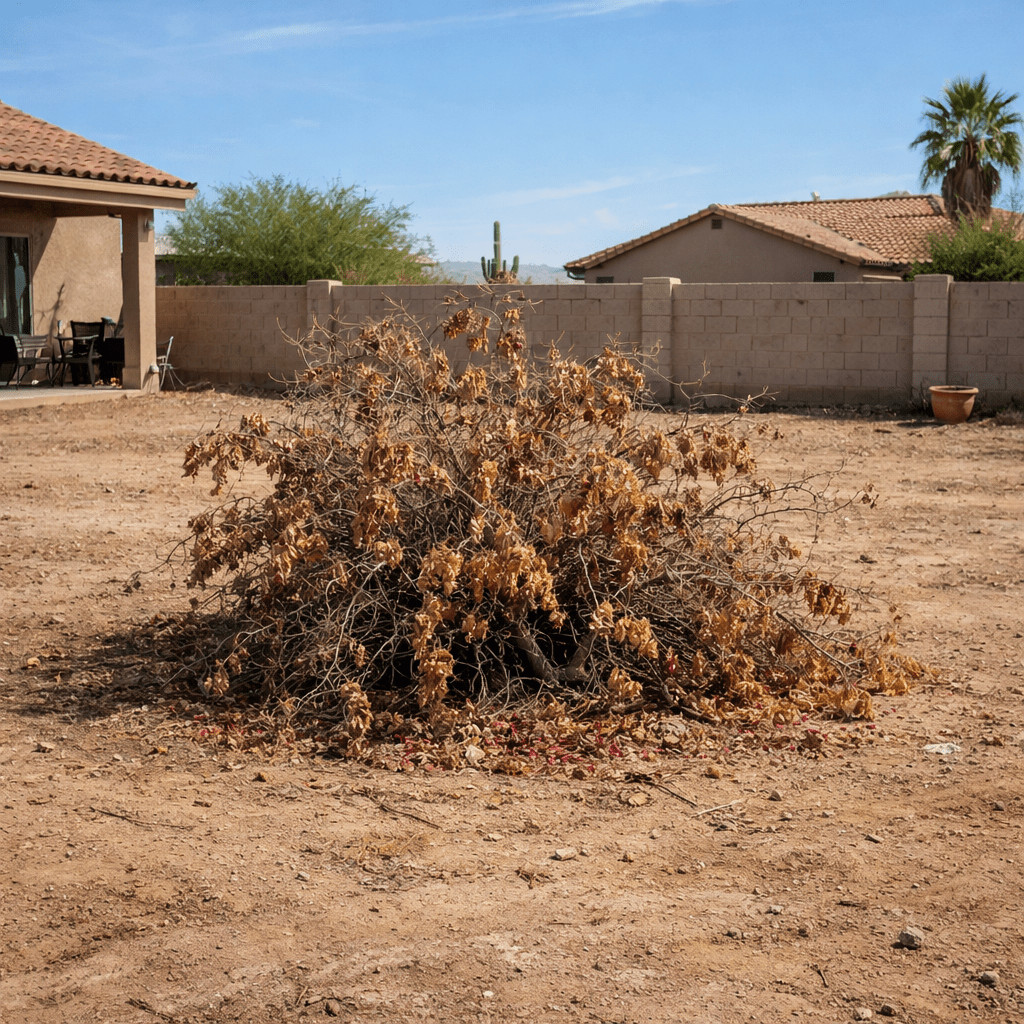
Next up is a matter of precision: learning how to water plants consistently inconsistent. That means staying regular, but adjusting for plant type, root depth, exposure, and maturity instead of mindlessly giving everything a quick daily splash.
At Garden Social, I’ve found that our gardens do not respond well to fast, shallow watering. They respond to deep, slow, early-morning soaks. We aim for daily irrigation with garden beds, and every 2–3 days for our potted trees and landscape shrubs. But well-established drought-tolerant plants in landscape spaces—often after their second or third year in the ground—can be watered as little as once a week in summer, even during peak heat.
The larger principle is well supported: deep irrigation encourages stronger root systems, while shallow watering often leaves roots near the surface, where soil dries fastest and heat stress hits hardest. Early morning watering also reduces evaporation and gives plants time to take up moisture before the hottest hours arrive.
Timing Is Everything
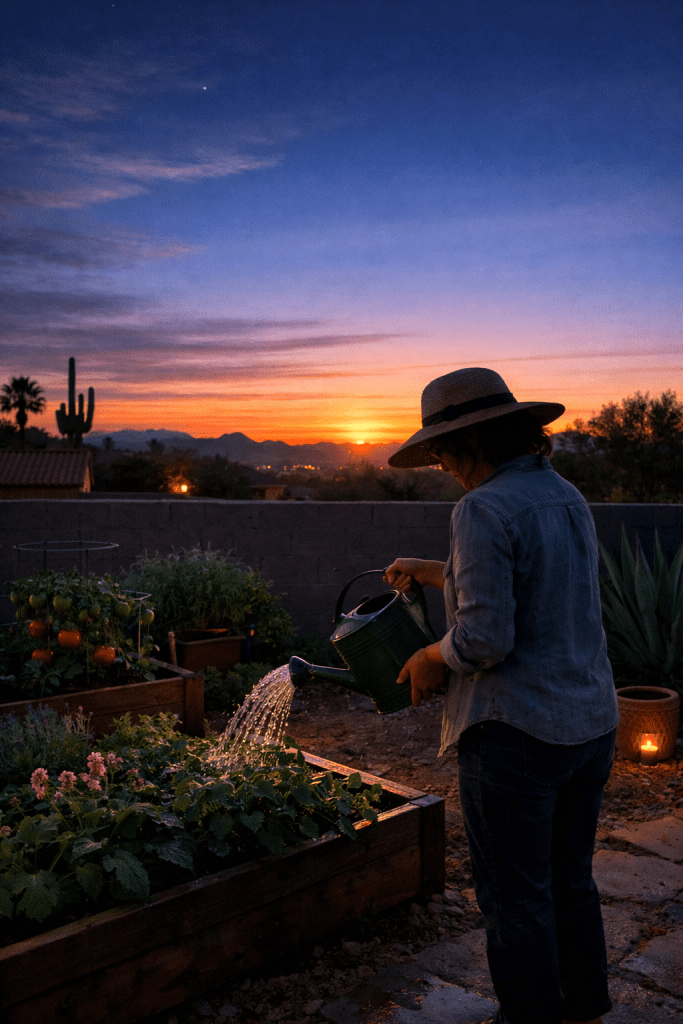
Timing matters just as much as quantity. One of the best things you can do for your plants in Arizona summer is water at least one to two hours prior to sunrise. That timing helps ensure your plant’s foliage is turgid, hydrated, and prepared to take on the day before the heat begins to build. Plants like a quick drink while they’re still cool and happy, not after they’ve already entered stress.
When plants repeatedly swing back and forth between drying out and rehydrating during peak heat, that stress adds up. Over time, it can lead to long-term damage that may not be reversible.
If you water by hand and cannot realistically commit to very early morning irrigation, investing in a battery-powered irrigation timer for your hose—or installing an in-ground irrigation system—may be the best fit. The goal is not just to water, but to water at the right time so your plants start the day ready, not recovering.
Nutrition and Soil Condition Matter More Than You Think
Nutrition and soil condition are critical. In fact, the smallest imbalances often impact your plants more than anything else during summer stress. When the soil is compacted, depleted, or unable to hold moisture evenly, your irrigation becomes less effective and your plants become more vulnerable to scorch, nutrient lockout, and decline. Healthy soil acts like a buffer against Arizona extremes. It helps moderate root-zone temperatures, improves water penetration, and supports the steady nutrient availability plants need to keep functioning in heat. Amending beds with organic matter, maintaining mulch, and paying attention to drainage and soil structure can make a dramatic difference in how plants perform through summer. If your shade is right and your irrigation is thoughtful but your plants still struggle, the answer is often below ground. Build the soil, and the rest of the system starts working better.
Arizona summer gardening is not about fighting the desert into submission. It’s about designing with it. If you begin with shade, water deeply and at the right time, and treat soil health like the foundation it is, you can stop cycling between panic and neglect. A resilient summer landscape is built through small, smart decisions repeated consistently—and that is exactly how you keep a garden alive, abundant, and beautiful through the most unforgiving season of the year.

Garden Social is here for you!
In the ever-evolving journey of desert gardening, patience and adaptability are your greatest allies. As you face each season’s challenges and rewards, remember that you don’t have to grow alone. Garden Social is here to support you every step of the way.
Whether you’re seeking expert landscape and garden design, irrigation planning and system repair or installation, help with planting and soil preparation, our team is dedicated to transforming your outdoor space. We handle the hard work so you can savor the true joys of cultivating a beautiful and resilient desert garden. Let us partner with you—so your garden can flourish, season after season.
For more information, please feel free to check out any of the pages below – or visit us in person!
 Garden Social
Leave a comment