A healthy garden is never completely bug-free, and it shouldn’t be. Most insects that you’ll find in your garden-space are harmless or helpful, while some become pests only when their numbers grow large enough to damage plants. The same is true of leaf changes and common disease: yellowing, curling, spotting, browning, and wilting are not random problems but signals. Learning to read those signals helps gardeners respond calmly, choose the least disruptive solution, and support stronger plants over time.
Buggin’ Out: Identifying Good Pests Versus Bad Pests
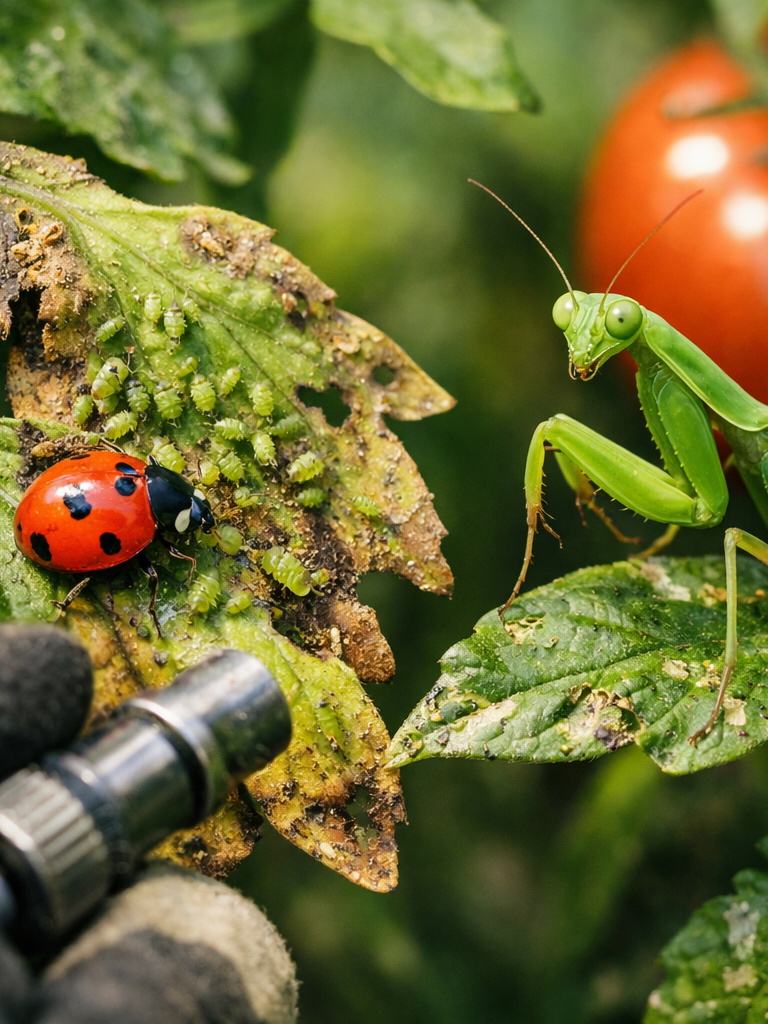
Before treating any insect as a problem, first ask what it’s doing. Beneficial insects usually pollinate flowers, prey on bad insects, or quietly move through the garden without chewing leaves or weakening stems. Harmful pests are usually identified by repeated damage: clusters on new growth, sticky residue, webbing, holes, distorted leaves, or a visible decline in plant vigor.
Common beneficial insects include lady beetles, lacewings, hoverfly larvae, spiders, bees, butterflies, and other pollinators. Some of their immature stages look unfamiliar, avoid assuming that every strange larva is harmful. Lacewing larvae, for example, are fierce predators of aphids, mites, whiteflies, and other soft-bodied pests.
Common plant pests include aphids, whiteflies, spider mites, scale insects, mealybugs, thrips, caterpillars, leaf miners, and beetles that feed heavily on leaves. The insect itself matters, but the pattern of damage matters even more. Aphids gather on new growth. Spider mites cause fine stippling and webbing. Caterpillars chew larger holes and leave black spots.
What to Do When You Find Insects on Plants
The best first step is observation. Look at the top and underside of leaves, stems, flower buds, and soil surface. Note whether the plant is actually declining or whether the insect is simply present. A few pests can support beneficial insects and may not require treatment. If the plant is healthy and damage is minor, continue monitoring rather than spraying immediately.
- Identify before acting: Take a close look or compare the insect and damage pattern with a trusted extension resource.
- Start with the least disruptive option: Remove pests by hand, prune heavily infested leaves, or rinse soft-bodied insects off with water.
- Support natural predators: Grow a mix of flowering plants, avoid broad-spectrum pesticides, and leave some habitat such as mulch, ground cover, and leaf litter where appropriate.
- Improve plant health: Correct watering, spacing, light, and soil issues so plants can recover.
- Use targeted products only when needed: If damage is increasing, choose the narrowest treatment suitable for the pest and follow the label exactly.
When You Can’t Identify the Problem
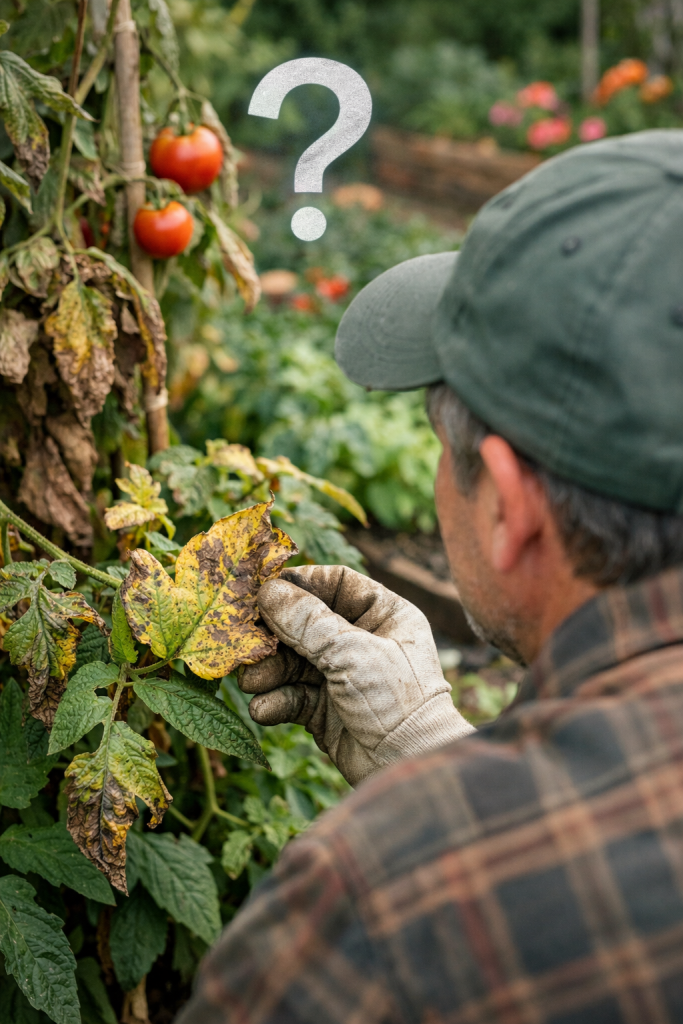
Sometimes the signs are confusing. A pest may be too small to see clearly, a disease may look like a watering issue, or several problems may be happening at once. When the cause is challenging to identify, do not rush into treatment. Take clear photos of the whole plant, the damaged leaves, the underside of leaves, stems, flowers, fruit, and the surrounding soil. If possible, bring a physical sample to your local extension office or to a Garden Social horticulture expert for proper identification.
Accurate identification matters because the wrong treatment can waste time, damage beneficial insects, stress the plant further, or allow the real problem to spread. A fungal disease, a nutrient issue, herbicide drift, spider mites, and drought stress can all create similar-looking symptoms, but each requires a different response. Understanding the actual issue helps you choose the safest and most effective next step, whether that means pruning, changing watering habits, improving airflow, adjusting soil conditions, or using a targeted product only when it is truly needed.
When the Problem Is Bigger Than a Quick Fix
There are times when a pest or disease issue grows beyond what a gardener can reasonably handle alone. If a problem is spreading quickly, taking over a plant, moving through multiple plants, returning after repeated treatment, or affecting a large area of the landscape, it is time to bring in a local horticulture professional. Serious infestations and disease outbreaks can move fast, and waiting too long may make recovery harder or increase the chance that the problem spreads to nearby plants.
Garden Social offers free pest and disease identification to help gardeners understand what they’re dealing with before choosing a treatment. For more complex situations, you can also schedule a home-visit consultation for a comprehensive review of your garden, landscape plants, soil health and unique plant needs. This kind of on-site support can be especially helpful when plant stress is connected to several factors at once, such as watering patterns, soil conditions, drainage, sun exposure, pest pressure, or disease activity.
The goal is not just to stop visible damage, but to understand why the issue is happening. A professional diagnosis helps match the treatment to the actual cause, avoid unnecessary products, protect beneficial insects, and create a plan that supports long-term plant health. When a problem feels too tough to handle, asking for help early can save plants, time, and frustration.
Introducing Disease and Leaf Illness
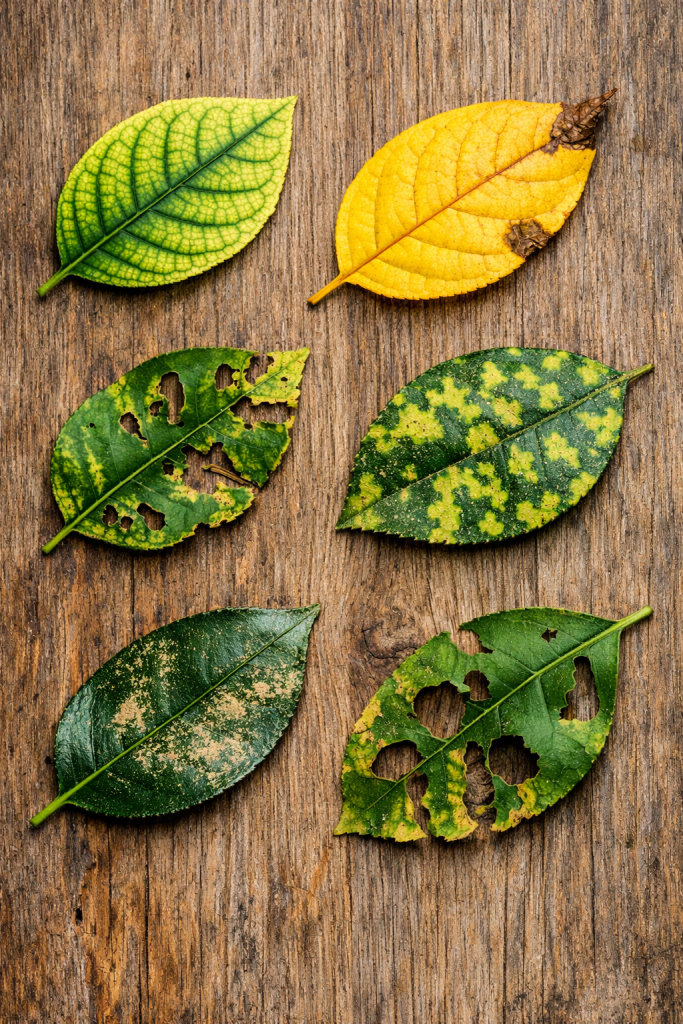
Not all plant problems come from insects. Many leaf changes are caused by disease, environmental stress, or a combination of several issues happening at once. Fungal, bacterial, and viral diseases can show up as spots, blotches, yellowing, wilting, distorted growth, powdery coatings, dark lesions, or leaves that collapse faster than normal. These symptoms can be alarming, but they are also clues that help narrow down what the plant needs next.
Disease often develops when conditions favor it, such as leaves staying wet for too long, plants growing too close together, poor airflow, stressed roots, contaminated tools, or infected plant debris left in the garden. Some illnesses spread by splashing water, insects, wind, soil contact, or handling plants without cleaning tools between cuts. Because symptoms can resemble nutrient problems, pest damage, drought, sunburn, or overwatering, it’s important to look at the whole plant and its growing conditions before deciding on a treatment.
Reading Leaf Changes: What the Plant May Be Telling You
Leaves often show stress before the whole plant declines. To diagnose the issue, look at where the symptoms appear first, what the pattern looks like, and whether pests are present. Older lower leaves yellowing may point to mobile nutrient issues such as nitrogen, magnesium, or potassium, while yellowing on new growth can suggest iron or other immobile nutrient problems. However, many symptoms overlap, so watering, light, soil, temperature, disease, and pests should all be considered before adding fertilizer.
| Leaf change | Possible causes | What to check first | Helpful response |
| Yellow lower leaves | Natural aging, overwatering, nitrogen deficiency, low light | Soil moisture, light level, whether new growth is healthy | Adjust watering, improve light, consider soil testing before fertilizing |
| Yellow leaves with green veins | Iron or magnesium issues, high soil pH, nutrient lockup | Whether symptoms are on new or old leaves; soil pH if possible | Correct watering and pH issues before adding nutrients |
| Brown crispy edges or tips | Underwatering, salt buildup, heat, wind, low humidity, potassium deficiency | Soil dryness, recent heat, fertilizer history | Water deeply and consistently, flush containers if salts are likely, protect from stress |
| Soft brown or black spots | Fungal or bacterial disease, overwatering, poor air circulation | Leaf wetness, airflow, crowded growth | Remove badly affected leaves, water at soil level, increase spacing and airflow |
| Curling or distorted leaves | Water stress, heat, herbicide drift, aphids, mites, thrips | Undersides of leaves, new growth, recent weather or chemical exposure | Correct water stress, remove pests gently, isolate severe cases if needed |
| Fine speckling or stippling | Spider mites, thrips, sucking insects | Undersides of leaves, webbing, tiny moving dots | Rinse foliage, improve humidity where appropriate, use targeted controls if infestation grows |
How to Help Different Plants Recover
Different plants respond differently to stress, so avoid using the same fix for every symptom. Succulents and cacti may yellow or rot when watered too often, while leafy vegetables may wilt quickly when water is inconsistent. Tomatoes and peppers often show leaf curl during heat or water swings. Houseplants may develop brown tips from low humidity, salts in water, or inconsistent watering. Outdoor ornamentals may show scorch from wind, sun, or reflected heat.
- Know the healthy version of the plant. Some varieties naturally have variegated, purple, silver, or patterned foliage.
- Check moisture before watering. Feel the soil below the surface rather than relying on appearance alone.
- Inspect leaf undersides. Many pests hide there before symptoms become obvious.
- Look for patterns. Lower leaves, new growth, edges, veins, spots, and tips each provide different clues.
- Change one thing at a time. Overwatering, overfertilizing, and repeated treatments can make diagnosis harder.
- Use soil testing when nutrient problems persist. Fertilizer helps only when the right nutrient is missing and available to the plant.
When it’s Time to Say Goodbye
Sometimes the best gardening decision is knowing when to let a plant go. If a plant is severely infested, repeatedly declining despite care, covered in disease, or acting as a source of pests for nearby plants, removing it may be the healthiest choice for the rest of the garden. This is especially true when a disease is spreading quickly, when treatment would require repeated products with limited success, or when the plant is too stressed to recover well.
Before removing a plant, confirm the problem as best you can and avoid composting material that may carry disease, pests, or eggs. Bag and discard heavily diseased or infested plant parts when appropriate, clean tools after pruning or removal, and monitor nearby plants closely for early signs of the same issue. Calling it quits does not mean failure; it means protecting the larger landscape and making room for a healthier replacement.
Growing Forward With Confidence
Every garden faces pests, disease, stress, and seasonal change, but each challenge is also an opportunity to learn. When gardeners slow down, observe closely, identify the real issue, and respond with care, they make better decisions for their plants and the larger garden ecosystem. The goal is not perfection; it is progress, balance, and healthier growth over time.
When pests or disease become too much to handle on your own, Garden Social Nursery and Garden Center is a powerful community resource and service provider. From free pest and disease identification to professional guidance and home-visit consultations, Garden Social helps gardeners understand what is happening, choose the right next step, and protect the long-term health of their plants, landscapes, and irrigation systems.
Garden Social is here for you!
In the ever-evolving journey of desert gardening, patience and adaptability are your greatest allies. As you face each season’s challenges and rewards, remember that you don’t have to grow alone. Garden Social is here to support you every step of the way.
Whether you’re seeking expert landscape and garden design, irrigation planning and system repair or installation, help with planting and soil preparation, our team is dedicated to transforming your outdoor space. We handle the hard work so you can savor the true joys of cultivating a beautiful and resilient desert garden. Let us partner with you—so your garden can flourish, season after season.
For more information, please feel free to check out any of the pages below – or visit us in person!


Leave a Reply