An expert opinion on the most controversial topic in Arizona landscaping.
In Southern Arizona, we’re often asked the same question every summer: “Is it impossible—or just bad timing—to plant during peak heat?”
My answer isn’t as simple as you might imagine. My name is Austin Lynn, owner of Garden Social AZ and Common Ground Landscape Solutions and President of Garden Social Community Impact. I want to start out with a resounding, totally controversial statement here: summer planting isn’t automatically ‘wrong’, but I do believe it demands more awareness, better plant selection, and a more intentional setup than most people expect.
In the Sonoran Desert, summer isn’t just “hot.” It’s a combination of intense solar exposure, low humidity, reflective hardscape, drying winds, and soil temperatures that can change quickly depending on shade, mulch, and irrigation. That’s why I don’t look at summer planting as a yes-or-no question. I look at it as a preparation question.
Confidence Is Key
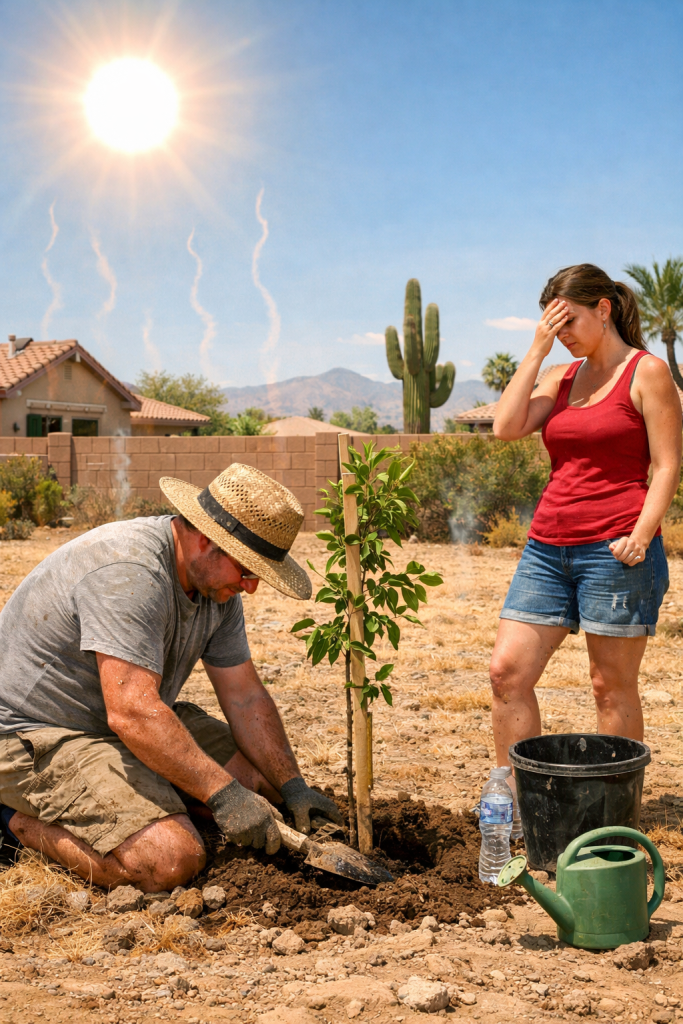
Put simply: if you feel the need to ask whether summer planting is a good idea, then summer is probably not ideal for you yet. That doesn’t mean it’s impossible. It means the margin for error is smaller, and the plant’s needs have to be dialed in from the start.
My team consistently installs plants throughout the summer. That doesn’t mean it’s easy, but it surely isn’t impossible. With a little knowledge, the right plant material, and the right watering strategy, summer can be just as workable as any other planting season.
That confidence comes from understanding what a newly planted shrub, tree, cactus, or perennial is actually going through. A plant coming out of a nursery container has a limited root system, and for the first several weeks, that root ball is still the plant’s main lifeline. In summer, the top few inches of soil can dry fast, but deeper moisture may still be available if the planting zone was prepared correctly. The difference between success and failure is often whether the installer understands that balance.
The Facts:
Many homeowners assume that the cool season is the safest time to plant because the air is cooler. Personally, I believe winter planting can be even more challenging than summer. In winter, I’m thinking about deep nighttime freezes, waterlogged soil that takes too long to dry out, slower growth, and delayed root establishment – factors you just can’t manipulate or control directly.
High summer temperatures, low humidity, and intense solar exposure can put tremendous stress on plants, while freezing temperatures can also damage sensitive plants in hard winter frost events. In other words, every season has risk; the key is understanding which risks you can manage. High heat can be managed by selecting plants already being grown in the heat, sunlight and humidity are less impactful with proper nutrition and meaningful irrigation.
The Sonoran Desert also has more than one “summer.” Early summer can be brutally dry before monsoon moisture arrives, and then monsoon season can bring humidity, sudden rainfall, heavy runoff, and changing irrigation needs. That shift matters. A plant installed in June may need a different level of attention than one installed in late July or August, even though both are technically summer plantings.
I say this from experience: I’d rather plant in the middle of the day at 110 degrees with the right preparation than plant blindly in winter and hope the soil, roots, and overnight temperatures cooperate. To me, summer heat is intense, but it’s also something we can plan around. Winter brings more variables that are harder to control.
Winter, on the other hand, can slow everything down. Roots establish more slowly in cold soil, and if a plant is sitting in wet, heavy soil during cool nights, it may not be actively growing enough to recover from stress. In summer, when water, oxygen, and soil structure are managed correctly, many warm-season and desert-adapted plants are actively growing and capable of pushing new roots into the surrounding soil.
Know Your Choices—and Know Them Well
Nursery stock varies widely from one garden center to another. Before you even consider planting during summer, you want to know that the landscape plants have been acclimated appropriately and grown outdoors locally.
Plants that have been babied in a controlled environment, sheltered under shade, or shipped from a much milder coastal climate are far more likely to struggle when dropped into a Southern Arizona landscape during peak heat. When I choose plants that have been grown outdoors locally, I know they have already been exposed to the same sun, air, and temperature swings they will face after installation.
Ask questions before buying: “Are these plants local?” “Have they been acclimated long enough to handle a hot-season transition into the ground?” If your garden attendant or nurseryman can’t answer clearly, don’t buy the plant. Simple as that.
Also pay attention to the plant’s form and condition before it ever leaves the nursery. I want to see healthy foliage, firm stems, good color, and a root ball that is neither bone-dry nor sour and waterlogged. A plant that’s already struggling in the container won’t magically improve just because it’s installed in the ground. In summer, we don’t have much room for weak starting material.
Plant choice matters too. Desert-adapted trees, shrubs, groundcovers, succulents, and cacti are built to handle our climate once established, but “drought tolerant” doesn’t mean “no water after planting.” Even low-water-use plants need consistent irrigation while roots move out of the nursery soil and into the surrounding native soil. That establishment period is where many failures happen.
Water Alone Just Doesn’t Cut It
When it comes to summer planting, I don’t believe the answer is simply “water more.” I’ve met plenty of new clients who honestly tell me they’re watering new plants two or three times a day just to keep them alive. The problem is that short, frequent cycles can confuse a new root system, keep moisture too shallow, and hinder healthy development.
Instead of chasing heat stress with random watering, focus on three essentials: the planting environment, soil drainage, and structured irrigation.
In our desert climate, evaporation is aggressive. Low humidity, frequent sunshine, and wind can pull moisture from soil and foliage quickly. At the same time, overwatering can be just as damaging as underwatering, especially in clay-heavy soils or areas with caliche that limits drainage. The plant doesn’t just need water; it needs the right air-to-water balance around the roots.
1. Emulate “Home” in the Planting Zone
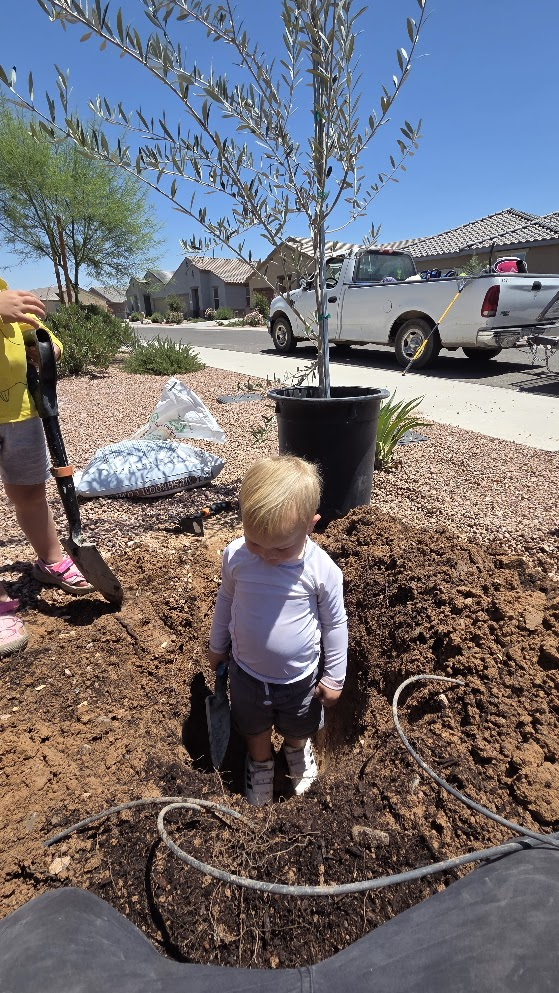
Once the hole is dug, my goal is to make the planting zone feel as similar as possible to the plant’s potted environment while still blending into the native soil around it. That means creating a root zone with oxygen flow, water retention, and drainage.
For many Southern Arizona yards, we recommend blending native soil with a premium compost. A practical starting point is at least one cubic-foot bag or bucket of quality compost worked into the planting area, aiming for a balanced mix of native clay and rich organic material.
Before planting, test the hole for drainage by filling it with water. If water remains pooled after 10 to 15 minutes, you need to address drainage before installing the plant. Dialing in the watering schedule matters, but it won’t matter how much you water if the soil itself doesn’t function.
This is especially important in many Southern Arizona yards where native soils can be compacted, clay-heavy, or interrupted by caliche. Clay can hold moisture for a long time once it’s wet, but it may accept water slowly. Caliche can create a hard barrier that keeps water perched in the planting hole. If the hole behaves like a bathtub, the plant’s roots can suffocate even while the homeowner believes they’re doing the right thing by watering.
I also avoid creating a perfect little pocket of rich soil surrounded by hard native ground. If the planting hole is amended too heavily without blending outward, roots may stay trapped in that soft pocket instead of expanding. The goal is transition: improve the planting zone, loosen the surrounding soil, and give roots a reason and a pathway to move outward.
2. Irrigate Properly When It Counts
Proper irrigation isn’t about constantly increasing volume and frequency. Even in nurseries, acclimated plants aren’t usually watered randomly all day long; irrigation is structured and intentional. That same intentional approach is what we bring into our summer installations.
For a newly planted shrub, low and slow is the way to go. With well-draining soil, moisture-retentive compost, and an acclimated plant, even full-sun summer planting becomes far more manageable. After planting, I want long-duration watering sessions that soak the root ball and surrounding soil, followed by enough time between cycles for the topsoil to dry slightly.
Regional watering guidance for Sonoran Desert landscapes also emphasizes that new plants need more frequent irrigation than established plants at first, but that each irrigation should wet the root ball and surrounding soil rather than only the surface. Deep, intentional watering encourages roots to establish where they should: down and out.
For new desert-adapted plants, regional guidance commonly starts with more frequent watering during the first several weeks, then gradually stretches the time between irrigations as roots establish. The important part is not the exact number of days on a generic schedule; the important part is that each irrigation wets the root ball and a small amount of surrounding soil, then allows oxygen to return before the next cycle.
Irrigation also needs to change with the season. A schedule that works in May may not work in July, and a schedule that works during a dry heat wave may need to be adjusted after monsoon storms. In the Sonoran Desert, we have to pay attention to weather patterns, exposure, soil moisture, and plant response instead of assuming one timer setting will carry a new landscape through the entire summer.
3. Pay Attention After Planting
Summer planting isn’t complicated, but it does require more attention. We watch the plant closely. We check soil moisture. We adjust irrigation based on exposure, drainage, wind, and plant type. A plant in full afternoon sun will behave differently than one tucked into a protected microclimate.
The goal isn’t to panic every time leaves look tired during extreme heat. The goal is to understand whether the plant is truly dry, sitting in wet soil without oxygen, or simply adjusting to a harsh transition. That distinction is where our experience matters.
I also look at the location around the plant. West-facing walls, block fences, artificial turf, gravel, concrete, and reflected heat can make one planting location dramatically hotter than another just a few feet away. Shade cloth, temporary protection, organic mulch where appropriate, and thoughtful placement can all reduce stress while the plant gets established.That’s why I don’t judge a summer installation by the first tired-looking afternoon leaf. I look for patterns. Is the plant recovering overnight? Is the root ball evenly moist? Is water moving through the soil? Are emitters placed correctly? Are we seeing sun scorch, transplant shock, drought stress, or saturated roots? Those questions matter more than simply adding another short watering cycle.
Trust the Team That Cares
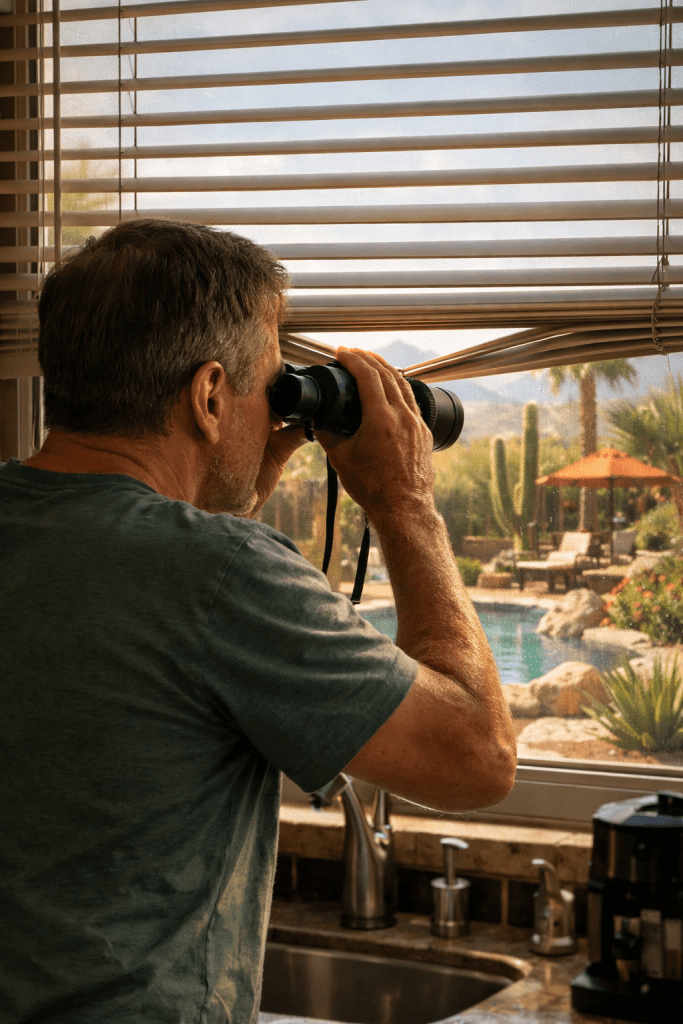
If summer planting feels like too much of a challenge, that’s exactly where the right team makes the difference. At Garden Social, we don’t just install plants—we install them with the components, soil preparation, irrigation planning, and aftercare they need to succeed.
When we install in summer, we’re not guessing. We’re looking at plant origin, container condition, root ball moisture, soil texture, drainage, exposure, irrigation layout, emitter placement, and the aftercare plan. That’s the difference between planting something and setting it up to establish.
My team consistently installs plants throughout the summer, and we stand behind that work with a 90-day installation warranty at no additional cost. Summer isn’t impossible. Poor preparation is. With the right plant, the right soil, the right watering, and the right installer, your landscape can thrive—even in the heart of a Southern Arizona summer.
So, is summer a bad time to plant in Southern Arizona? Not automatically. It’s a bad time to plant carelessly. But when the plant is locally acclimated, the soil is prepared correctly, irrigation is intentional, and aftercare is taken seriously, summer planting in the Sonoran Desert can absolutely succeed.
Garden Social is here for you!
In the ever-evolving journey of desert gardening, patience and adaptability are your greatest allies. As you face each season’s challenges and rewards, remember that you don’t have to grow alone. Garden Social is here to support you every step of the way.
Whether you’re seeking expert landscape and garden design, irrigation planning and system repair or installation, help with planting and soil preparation, our team is dedicated to transforming your outdoor space. We handle the hard work so you can savor the true joys of cultivating a beautiful and resilient desert garden. Let us partner with you—so your garden can flourish, season after season.
For more information, please feel free to check out any of the pages below – or visit us in person!
 Garden Social
Leave a comment